Bath textile care and buying guide
How to Evaluate Bath Towels by Weight, Absorbency, and Drying Time
A towel can feel plush in the store and still disappoint at home. Weight offers a useful clue, but fiber, weave, construction, and the time a towel takes to dry all shape how it performs in daily life.
A bath towel has a deceptively simple assignment: take water off the body, then become ready to do it again. Yet those two tasks—absorbing moisture and drying between uses—can pull in opposite directions. Thick, dense fabric may feel enveloping and hold plenty of water, but it can take longer to dry. A lighter towel may dry quickly and hang easily, but may not offer the substantial feel some people prefer after a shower.
That is why choosing a towel by a single number rarely works. GSM, or grams per square meter, measures fabric weight. It can help compare towels, especially when they are made from similar fibers and constructions. But GSM does not directly measure softness, absorbency, durability, or drying speed. It describes one part of the textile, not the entire experience.
For a household, a towel that is pleasant to use and easy to launder may be the right answer. For a guest bathroom, a busy family, or a hospitality setting, repeated use and limited drying space may matter more than a luxurious first impression. The best bath towel is not necessarily the heaviest. It is the one whose material and construction suit the work it has to do.
What towel GSM tells you—and what it does not
GSM stands for grams per square meter. In practical terms, it indicates how much a square meter of fabric weighs. A higher GSM usually means more material in the fabric, which can contribute to a denser, fuller hand. A lower GSM often points to a lighter towel that is easier to handle and may dry more quickly, depending on its fiber and weave.
These are tendencies, not guarantees. Two towels with identical GSM can feel and perform differently because their fibers, yarns, pile, and finishing differ. A towel’s surface may be looped, flat, or textured; the loops may be short or long; and the yarn may be made from different kinds of cotton, linen, or a blend. Each choice changes how water enters the fabric and how much air can circulate through it.
GSM is most useful as a comparison tool when the towels are broadly alike. Compare labels for fiber content and construction, too. If one towel is cotton terry and another is a linen waffle weave, their weights alone cannot tell you which will suit your habits. They are different textile designs, built to deliver different sensations and routines.
It also helps to separate “heavy” from “high quality.” More weight can bring a cushioned, substantial feel, but it can mean more fabric to wash and dry. A lighter towel may be deliberately designed for efficient everyday use, travel, warm climates, or homes where towels are washed frequently. Weight is a preference and a practical consideration—not a quality grade.
Absorbency is a combination of fiber and construction
Absorbency describes how readily a towel takes up water and how much it can hold. The result depends on more than the amount of fabric. Fiber type, yarn structure, surface area, and weave all matter. In a terry towel, raised loops create a large contact surface that can pick up moisture. In a waffle weave, the raised pattern and recessed spaces create texture while keeping the cloth relatively open and light.
Cotton is widely used in bath towels because it can absorb moisture and is familiar in everyday laundry. But cotton towels are not all identical: fiber length, yarn quality, spinning, loop construction, and finishing can influence the feel and performance. A label that says “cotton” is useful, but it does not tell the whole story. Look for clear descriptions of construction and follow the maker’s care directions.
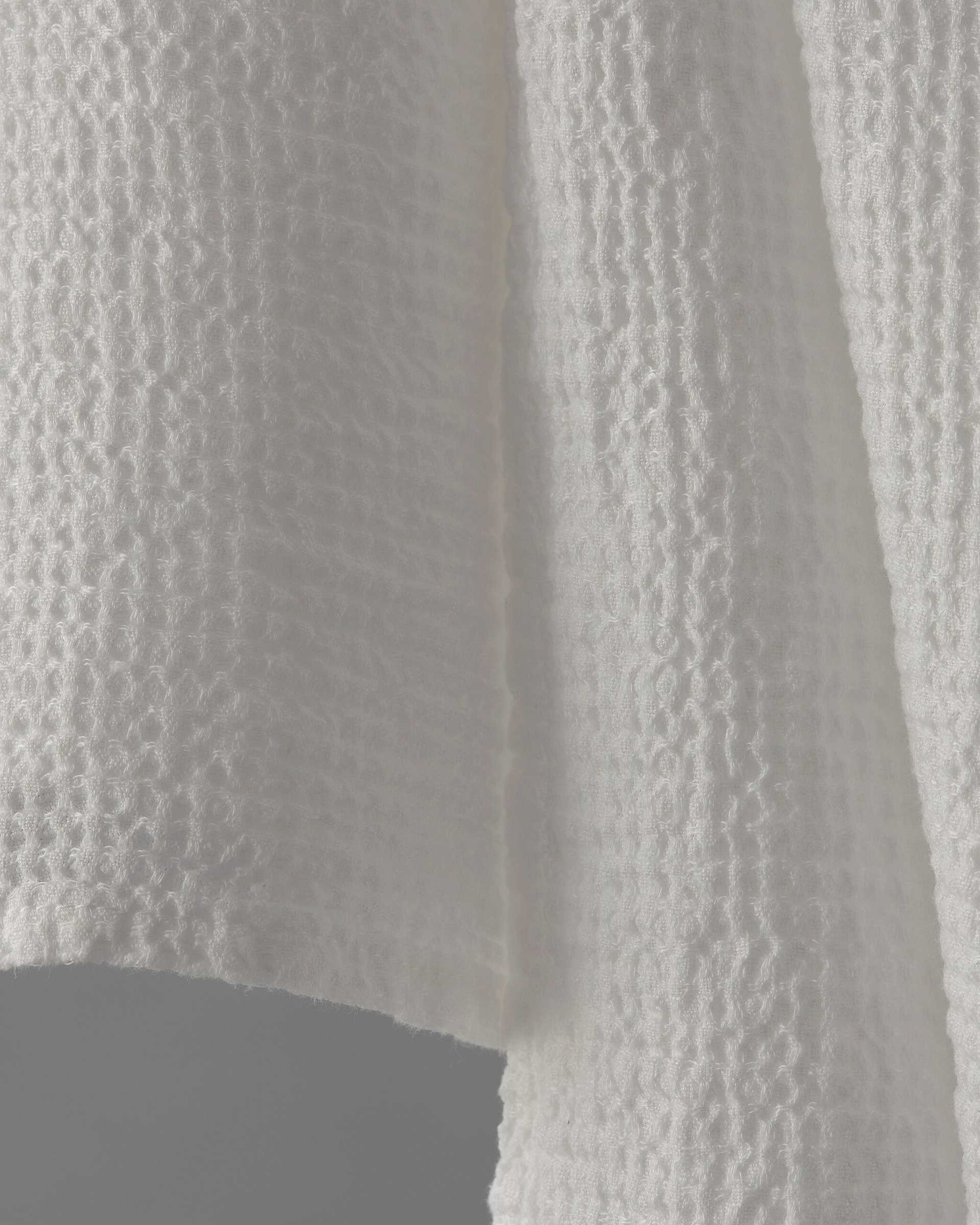
Linen offers another approach. Made from flax fibers, linen towels can have a flatter, more textured feel than plush terry. Their performance depends on how the fibers are woven. A waffle pattern, for example, gives linen more surface texture and can make a lightweight cloth feel more substantial in use. The Lipe New Towel Set is made from pure linen in a traditional waffle weave, a construction suited to people who prefer a lighter, textured towel rather than a thick terry pile.
Absorbency should be judged in context. A towel that removes water effectively with a few passes may be preferable to one that feels soft but leaves the skin damp. Equally, someone who likes a gentle, plush wrap may value the hand-feel and coverage of a heavier towel. The most meaningful test is how the towel works for you after it has been washed and used—not simply how it feels folded on a shelf.
New towels may also behave differently from towels that have been laundered. Finishing residues or fabric treatments can affect how quickly water is taken up at first. Follow the product’s instructions before use, and avoid assuming that an initial impression represents long-term performance. Fabric softeners, in particular, can leave a coating that may reduce absorbency over time. If a towel seems less effective, review its care routine before concluding that the fabric itself is at fault.
Drying time is the practical counterweight
Absorbency is only half the cycle. After use, the towel has to release the moisture it has collected. Drying time is shaped by fabric density, fiber, weave, room temperature, airflow, humidity, and how the towel is hung. A dense towel may retain more water and feel comforting, but it can need more time and space to dry. A lighter, more open construction may release moisture sooner, especially when it is spread out in a ventilated room.
There is no universal drying-time figure that applies to every home. A towel hung over a narrow hook may remain bunched and damp; the same towel spread across a rail can dry more evenly. A bathroom with poor ventilation may slow drying regardless of GSM. In a humid climate, drying may take longer than it does in a dry, breezy room. The towel’s care label cannot account for every household condition.
Drying speed matters for more than convenience. A towel that stays damp can develop an unpleasant odor and may need laundering sooner. That does not mean the lightest towel is automatically the best choice; it means the fabric should match the environment. If several people share one bathroom, if towels are used repeatedly between washes, or if there is little room to hang them, a quick-drying construction may be especially useful.
Consider the laundry setup before buying. A thick towel takes up more space in a washer and dryer than a lightweight one. A large household may need towels that can be washed and dried in regular batches without crowding the machines. In a guest room used only occasionally, a more substantial towel may be a welcome comfort, provided it can be aired properly between visits.
A useful way to compare towel weights
Manufacturers use GSM ranges to communicate whether a towel is lightweight, medium-weight, or dense, but category boundaries vary. Treat any range as a broad orientation rather than a universal standard. The numbers are most helpful when they narrow the field; the final decision should also account for fiber, weave, size, and care.
- Lightweight: Often easier to pack, hang, and launder. It may suit warm bathrooms, frequent washing, or people who prefer a less bulky towel.
- Medium-weight: A versatile middle ground for many homes, balancing a comfortable hand with manageable bulk.
- Heavier: Often feels fuller and more enveloping. It may be appealing for a spa-like wrap or a colder bathroom, but can require more time to dry.
These descriptions are not performance promises. A lower-GSM towel can still be absorbent when its fiber and construction are well suited to the task. A higher-GSM towel can feel luxurious yet remain inconvenient if the household has limited drying space. Use weight as a first filter, then examine the details that explain what the fabric is made to do.
The questions to ask before choosing
Shopping becomes simpler when the decision begins with the room and routine rather than the product label. Ask how often the towel will be used, where it will hang, how frequently it will be washed, and what kind of feel is comfortable against the skin. Those answers help identify the right balance of absorbency, drying time, and weight.
- Who will use it? A single-user bathroom has different demands from a shared family bathroom or a guest space.
- How will it be hung? A wide rail gives a towel room to spread; a small hook may favor a lighter, less bulky option.
- How much laundry capacity is available? Several dense bath towels can fill a load quickly and take longer to dry.
- What feel do you prefer? Some people want a soft, plush surface; others prefer a flatter, textured fabric.
- What does the care label require? Washing and drying instructions should fit the routine you can realistically maintain.
- Is the towel sold individually or as part of a set? Check dimensions and contents so the item fits the way you plan to use it.
For businesses, add replacement and operating costs to the checklist. A towel used by multiple guests may face more frequent laundering than a household towel. Durability, drying capacity, laundry labor, and consistency of supply can matter as much as first-use softness. A product that performs well in a home may not be the most efficient option for a high-turnover operation, and vice versa.
Care can change performance over time
Even a well-chosen towel can lose its appeal if it is overloaded, poorly rinsed, or dried without enough airflow. Follow the care instructions for the specific textile. Different fibers and finishes can call for different washing temperatures and drying methods, so generic advice should not override the product label.
As a general habit, avoid packing the washer so tightly that water and detergent cannot circulate. Use an appropriate amount of detergent, since excess product may remain in the fabric. Fabric softener can reduce water uptake in some towels by depositing a coating on the fibers; if absorbency is important, use it sparingly or follow the manufacturer’s guidance. Do not use bleach unless the care instructions specifically allow it.
After washing, shake towels out and hang them with space around the fabric. That small step helps separate the surface and allows air to reach more of the cloth. If you use a dryer, avoid excessive heat or over-drying unless the label recommends otherwise. High heat and rough treatment can contribute to wear, while a towel left damp in a pile may develop odor before it has a chance to dry.
Wash towels according to household needs and hygiene practices. A shared towel that stays damp or is used often may need more frequent laundering than one used occasionally by a single person. Keep towels fully dry between uses where possible, and replace them when they no longer perform well or show significant wear. Fraying edges, thinning areas, and persistent odor are practical signs that a towel may have reached the end of its useful life.
A simple at-home comparison
If you are comparing towels you already own, use the same conditions for each. Wash them according to their labels, then use each towel after a shower or bath. Notice how much effort it takes to dry your skin, whether the fabric feels comfortable, and how well the towel covers the body. Then hang each one in the same place, spread as evenly as possible, and compare how it feels later.
This is not a laboratory test, and the result will depend on the room. It is, however, a useful household assessment because it reflects the conditions that matter most: your bathroom, your drying space, and your preferences. Keep notes if you are deciding what to buy for a family, rental, or guest room. Include the towel’s fiber, weave, approximate weight if known, and your impression after repeated washes.
For a more disciplined comparison, change only one factor at a time. Compare two towels of similar size and fiber but different GSM, or two towels of similar weight with different weaves. If every characteristic changes at once, the reason one towel performs better may remain unclear. A few careful observations can be more valuable than treating a marketing claim as a verdict.
The best towel is the one that fits the whole routine
GSM gives shoppers a common language for fabric weight, but it is not a shortcut to a perfect towel. Absorbency depends on fiber and construction. Drying time depends on the towel and the room around it. Softness depends on material, finishing, use, and care. No single specification captures all of those things.
For someone who wants a plush, substantial wrap, a heavier towel may be worth the extra laundry and drying time. For someone with limited hanging space or frequent wash cycles, a lighter, more open weave may prove easier to live with. A textured linen towel can offer a distinct alternative to terry, while cotton terry remains familiar to many households. Neither choice is universally superior; each serves a different preference and setting.
Look at the label, check the construction, and imagine the towel in use—not merely on a shelf. The right decision balances how it feels against the skin with how it handles water, how quickly it dries, and how reliably it survives the household routine. That balance, rather than weight alone, is what makes a towel a good one.
Quick checklist for a towel buying guide
- Use GSM to compare weight, not as a stand-alone quality score.
- Check fiber content and construction, including whether the towel is terry, flat woven, or waffle textured.
- Consider absorbency and drying time together; a towel that holds water may take longer to dry.
- Match towel bulk to your hanging space, washer capacity, and laundry frequency.
- Read the care label and avoid routines that leave fabric crowded, coated, or damp for long periods.
- Choose the feel and performance that suit the people and place the towel is meant to serve.