Bedding · Styling Guide
A Practical Guide to Layering Decorative Pillows on a Bed
A well-dressed bed is less about having more pillows than knowing what each one is doing. Start with the pillows you sleep on, add a few deliberate layers, and let scale, texture, and color do the work. The result can feel considered without turning bedtime into a daily rearranging project.
Decorative pillows are small objects with an outsized effect. They can make a bed feel finished, introduce a new texture, or bring a quiet color into a room. They can also multiply until the bed looks crowded and the nightly routine begins with a pile on the floor. The difference is usually not a matter of taste or budget. It is a matter of proportion and restraint.
The practical approach is straightforward: consider the bed’s width, preserve the pillows you actually use for sleeping, then build a short sequence of complementary sizes and shapes in front. A couple of well-chosen accents are often more effective than a row of unrelated cushions. Decorative pillow covers offer a useful way to bring in color or texture without committing to a whole new bedding set—and they can be removed for washing or changed as the room evolves.
This guide explains how to plan the arrangement, choose dimensions, coordinate materials, and keep the setup comfortable. It also considers how Coyuchi pillow covers can bring natural-fiber texture to a layered bed. The goal is not a showroom arrangement frozen in place. It is a bed that looks inviting and remains easy to use.
Begin with the bed, not the accent pillows
Before choosing decorative pillows, take stock of the bed itself. A twin bed has less room for a wide arrangement than a king, and a low headboard creates a different backdrop from a tall upholstered one. The bedding matters, too: a lofty duvet already adds volume, while a neatly tucked coverlet may leave more visual space for pillows.
Next, identify the pillows that belong in the bed for sleeping. Their size, shape, and usual position are the foundation of the arrangement. Decorative layers should complement those pillows—not make them hard to reach or force sleepers to move an elaborate display every night. If two people share the bed, leave enough room for each person’s preferred pillow setup.
- Measure the visual width. Look at the mattress, headboard, and bedding together. The arrangement should feel in scale with the bed rather than extending far beyond its edges.
- Note the sleeping pillows. Standard, queen, or king pillows establish the largest useful shapes and often form the back row.
- Consider the headboard. A tall or strongly patterned headboard may call for a simpler arrangement; a plain, low headboard can accommodate a little more layering.
- Keep the routine in mind. If you want the bed ready for sleep in seconds, choose an arrangement that can be lifted away in one or two easy moves.
There is no universal pillow count. The right number is the one that suits the bed and the people who use it. For some bedrooms, two sleeping pillows and a single accent are enough. A larger bed may have room for several layers, but space is not a requirement to fill every available inch.
Build from large to small
Think of the arrangement as a simple progression. The largest pillows sit at the back, close to the headboard. Smaller forms come forward, where their shape and fabric can be seen. This stepped sequence provides a clear visual order and makes the display easier to assemble than a collection of same-sized cushions.
Sleeping pillows or larger bed shams usually anchor the back. A smaller square pillow can create the next layer, while a lumbar pillow or compact accent can finish the front. These are options, not rules. If the sleeping pillows are already prominent, there may be no need for an additional back row. If the bed is narrow, a single accent in front may be all the space allows.
Shape contributes as much as size. Square pillows introduce a familiar, settled outline. A rectangular lumbar pillow adds a horizontal note that can break up a series of squares. Mixing shapes is most effective when the arrangement still has a visual center: a clear largest-to-smallest order, related colors, or a shared fabric quality can tie the pieces together.
- Anchor: Arrange the sleeping pillows or shams at the back, evenly positioned against the headboard.
- Layer: Add one or two accent pillows in front, keeping their dimensions smaller than the pillows behind them.
- Finish: Use a smaller square or lumbar shape only if it adds a useful change in scale or texture.
Try the arrangement in daylight and from the doorway, rather than judging it only from close range. From across the room, the overall silhouette matters more than tiny differences in placement. Step back, remove one pillow, and compare. Often the simpler version has more presence because each individual shape can be read.
Choose proportions that leave room to breathe
Decorative pillow dimensions should be considered in relation to the bed and to the insert inside the cover. A cover that is too small for its insert may strain at the seams; one that is too large can look slack. Check the product dimensions and insert recommendations before buying, and remember that the stated cover size describes the cover—not necessarily the finished pillow’s visual bulk.
Scale is not simply about using a small pillow on a small bed and a large one on a large bed. A single accent with enough presence can look balanced on a queen bed, while several bulky pillows can crowd a king. The headboard, duvet loft, and amount of visible mattress all affect the result. Use the bed’s outline as a guide: decorative layers should frame the center without swallowing it.
Spacing helps. A little separation between pillows keeps their edges distinct and prevents a dense, upholstered-wall effect. The pieces do not need to be rigidly symmetrical, but an arrangement should have a sense of balance. If one side carries a strong color or a noticeably larger accent, consider echoing that weight elsewhere—with another pillow, a matching sham, or a quieter color relationship.
When in doubt, begin with fewer pieces. Add pillows one at a time and stop when the bed looks complete rather than when every available cover has been used. This also makes it easier to identify which pillow is doing useful work and which one is simply taking up space.
Let color create a connection
A coordinated bed does not require every textile to match exactly. In fact, an exact match from sheet to duvet to pillow can flatten the arrangement. A more flexible approach is to choose a small palette: perhaps a neutral foundation, one secondary shade, and a limited accent. The colors can vary in intensity while still sharing a clear relationship.
Begin with what is already in the room. Sheets and a duvet cover may supply the dominant colors; the wall, headboard, rug, or curtains can offer a useful supporting note. A decorative cover can repeat one of those shades, deepen it, or introduce a restrained contrast. Keeping one color visible in more than one place helps the room feel connected without requiring identical patterns or fabrics.
Pattern needs room to register. If the duvet is patterned, a solid or subtly textured pillow cover can provide a calmer counterpoint. If the bedding is plain, a small-scale stripe or woven detail may offer interest without taking over. Pairing patterns is possible, but differences in scale help: a larger motif can sit alongside a quieter stripe or fine texture, rather than competing with another equally bold design.
Color also changes character with light. A pale neutral may look warm in afternoon sun and cool under evening lamps. Before settling on a palette, observe the bedroom at different times of day. The aim is not a perfect match on a screen; it is a combination that feels at home in the actual room.
Use texture to add depth without adding clutter
Texture can make a neutral bed feel layered even when the colors are close. A smooth sheet, softly rumpled duvet, and more visibly woven accent cover create differences that the eye can register without a loud pattern. The key is contrast: too many highly textured surfaces can become busy, while several flat, similar fabrics may leave the arrangement feeling one-dimensional.
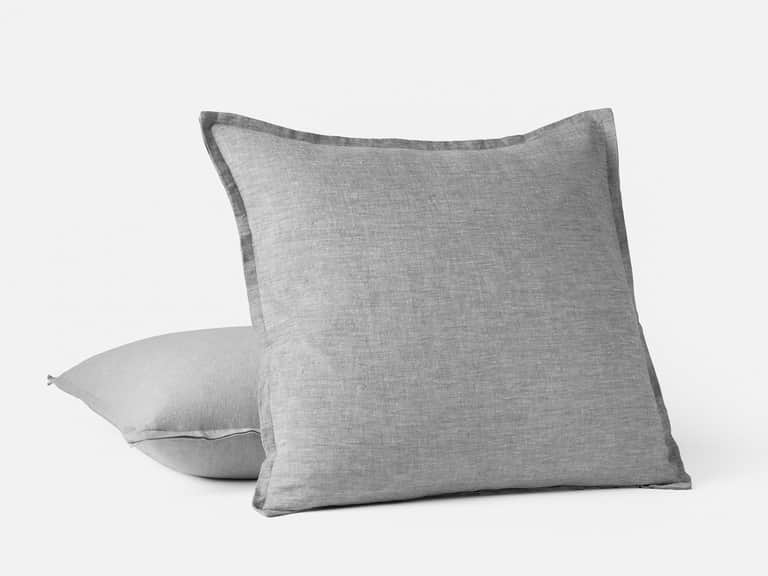
Linen is one option for that textural contrast. Its woven surface and relaxed appearance can sit naturally beside crisp cotton or a smoother duvet cover. A linen accent does not need to match every other linen item in the room. It can work as a small material shift that makes the bed feel more personal.
A Coyuchi Organic Relaxed Linen Decorative Pillow Cover, for example, is made from organic linen grown in Europe and woven in Portugal. It has a washed, relaxed hand and is designed to coordinate with linen bedding. The cover is listed as machine washable, with cold water and a gentle cycle recommended; the pillow insert is sold separately. Its square form can serve as an accent layer, while the relaxed linen texture offers a natural contrast to smoother bedding.
For a coherent effect, repeat a material or finish in a considered way. A linen cover can relate to linen sheets, a sham, or another natural textile in the room. Repetition does not have to mean duplication: a mix of scale and finish keeps the arrangement from looking like a uniform set. One decorative cover can be enough to establish the texture.
Make shams part of the transition
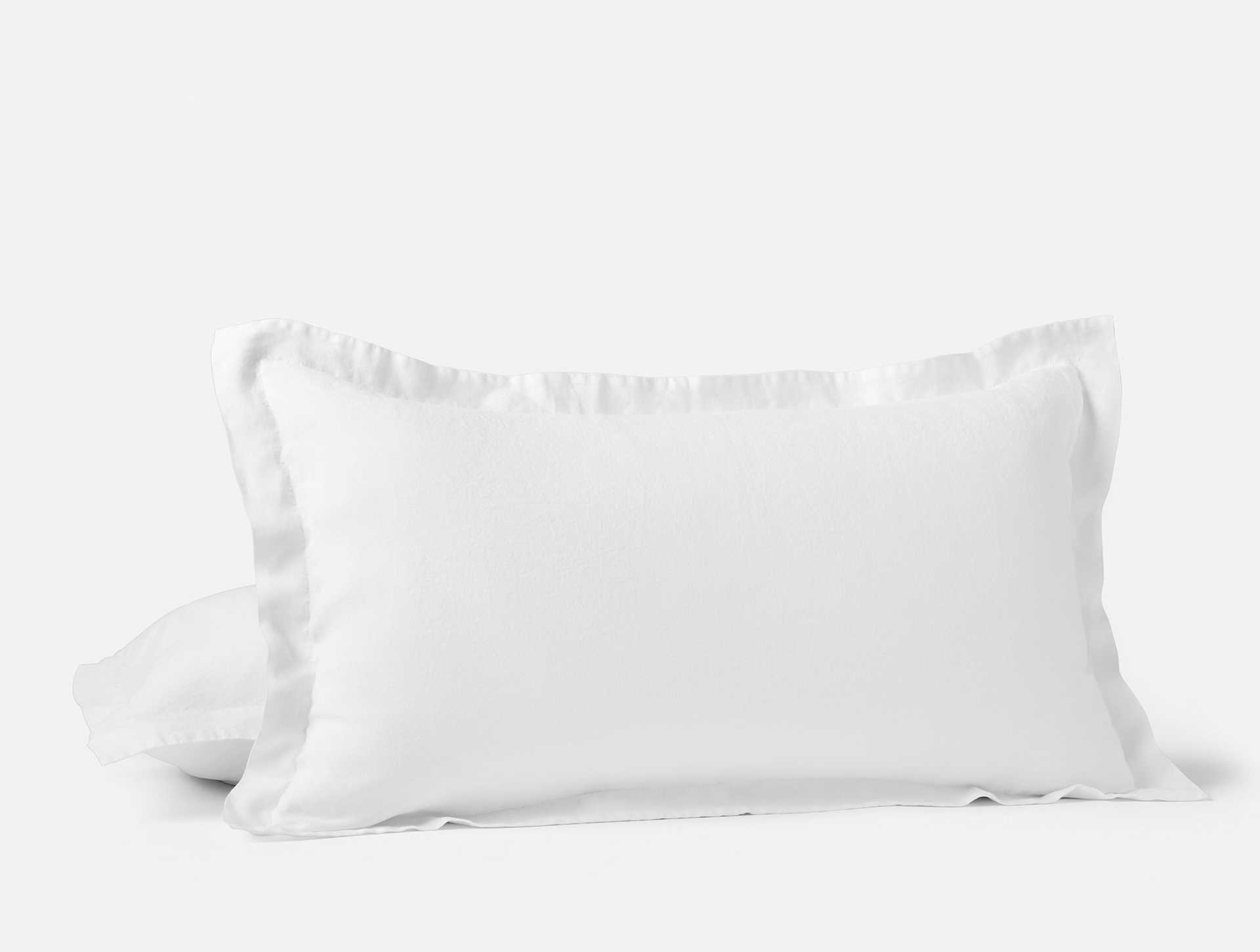
Shams can act as a bridge between sleeping pillows and decorative accents. Their larger format gives the back of the arrangement a finished outline, while their fabric can relate to the sheets or duvet. A sham is not the same as a decorative pillow: it is often closer to the scale of the bed’s regular pillows, and it can be used as a bedding layer rather than a small accent.
A pair of Coyuchi Organic Relaxed Linen Shams can provide that larger layer. The product is made from GOTS-certified organic French linen, woven in Portugal, and each sham is sold individually. Its relaxed linen feel and breathable construction make it a practical fabric choice for bedding; the care guidance recommends a cold, gentle wash with like colors and low tumble drying.
Whether to use shams depends on the pillows already on the bed. If the sleeping pillows are normally kept in protective cases, place the shams behind them or use the shams as the visible back layer during the day. The setup should not require an inconvenient switch of pillows at night. Choose pieces that earn their place through function, finish, or both.
A few arrangements to try
These starting points can be adjusted to fit the size of the bed, the bedding already in use, and personal preference. Treat them as frameworks, not formulas.
- Minimal: Keep the sleeping pillows at the back and add one decorative pillow in front. Choose a shape or texture that differs from the bedding without introducing a competing focal point.
- Balanced: Arrange two larger pillows or shams behind two smaller accents. Use related colors or a shared fabric to connect the layers.
- Softly varied: Place the sleeping pillows at the back, add two square accents, and finish with one low lumbar pillow. Keep the palette quiet so the changes in shape can lead.
- Texture-led: Start with plain bedding, then add one linen cover and perhaps one smoother accent. Let material, rather than a strong print, create the contrast.
For a narrow bed, remove one piece from any arrangement before adding another. For a wide bed, resist the temptation to fill its width with a continuous row. A little negative space around the pillows preserves the bedding’s shape and keeps the arrangement from feeling heavy.
Comfort and care are part of the design
A display pillow is still a household textile. It will be handled, moved, and occasionally washed. Check the care label before buying, particularly if the cover is made from a natural fiber, has a detailed finish, or is intended to coordinate with frequently laundered sheets. Different products can call for different water temperatures, cycles, and drying methods; follow the instructions for the specific item rather than assuming all linen should be treated alike.
Removable covers make routine care easier. A pillow cover can be washed separately from its insert, if the instructions allow, and an insert can be aired or cleaned according to its own label. Keep the insert dry and use a size that fills the cover neatly without overstuffing it. A well-fitted insert supports the shape and helps the cover lie smoothly.
Daily handling matters, too. If decorative pillows are removed at night, choose a storage spot—a bench, basket, or clear section of the bed—that keeps them clean and easy to retrieve. If the arrangement takes several minutes to undo, it may not suit the household. The best bed styling accommodates real habits instead of demanding that they change.
Care can also influence which textiles make sense. A delicate accent may be suitable for a guest room or a bed that sees limited use. For a frequently used bedroom, a washable cover with straightforward instructions is often the more practical choice. Comfort is not only what a pillow looks like; it includes how easily the bedroom can return to its everyday state.
Common mistakes—and their simple fixes
- Too many layers: Remove one accent and see whether the bed feels clearer. If the overall arrangement improves, the extra pillow was not needed.
- All the same shape: Introduce one different silhouette, such as a lumbar pillow, or vary the scale of the squares.
- Unrelated colors: Repeat one color from the bedding or room in an accent cover to connect the elements.
- Overstuffed covers: Check the cover and insert dimensions. A tight, distorted cover can undermine even a well-chosen fabric.
- Decorative pieces blocking the bed: Lower the front layer or reduce the number of pillows so the bedding remains visible.
- Ignoring upkeep: Review care instructions before committing, and make sure the routine fits how the room is used.
One useful test is to remove every decorative pillow, then add pieces back one at a time. Each addition should improve the balance, introduce a useful contrast, or provide a comfortable layer. If it does none of those things, it can stay off the bed.
The finishing touch is knowing when to stop
Layering decorative pillows is a way to shape the mood of a bedroom, not a requirement to build an elaborate display. Start with the bed’s proportions and the pillows used for sleep. Arrange the largest forms at the back, vary shapes and dimensions with care, and connect colors through a restrained palette. Use texture where it adds depth, and choose covers whose care and fit make sense for everyday life.
A natural linen accent can bring a quiet, tactile note to plain bedding; a sham can help create a composed back layer. Neither needs to be part of a complete matching set. The strongest arrangements often rely on a small number of pieces that work together without looking identical.
Finally, make the bed easy to live with. Leave room for sleep, keep the nightly reset simple, and choose only the layers that genuinely improve the room. A balanced bed is not one with the most pillows. It is one that looks welcoming in the morning and remains comfortable when the day is over.