Textile guide · Organic bedding
What GOTS Certification Means for Naturepedic Organic Bedding
A certification mark can make a bedding label look reassuringly simple. The supply chain behind it is not. Understanding what the Global Organic Textile Standard (GOTS) covers—and what it leaves unanswered—helps shoppers evaluate Naturepedic organic bedding with clearer eyes.
Published November 26, 2026
Buying sheets is an intimate decision disguised as a practical one. The fabric is against the skin for hours; its weight, texture and temperature can shape the experience of a night. But the words on a product page—“organic,” “natural,” “responsibly made”—speak to more than touch. They raise questions about where fibers began, how they were processed and whether a claim can be checked beyond the marketing copy.
For consumers comparing organic bedding, GOTS is one of the more useful signals to understand. The Global Organic Textile Standard is not simply a statement that a plant was grown without certain inputs. It is a textile standard that addresses organic fiber content and sets requirements for processing and for facilities involved in the supply chain. That wider scope makes it more informative than a vague “eco” description, while still leaving important product questions for shoppers to investigate.
Naturepedic’s organic linen sheets and duvet covers provide a practical example. Product descriptions identify the bedding as made from GOTS-certified organic flax linen, with flax grown in France and production in India at a GOTS-certified organic facility. The listed fabric weight is 185 grams per square metre. Those details are useful—but each tells a different part of the story. Certification, fiber origin, manufacturing location, construction and comfort should not be treated as interchangeable facts.
What GOTS is designed to verify
GOTS, short for the Global Organic Textile Standard, is a voluntary certification system for textiles made with organic fibers. It follows materials through a chain of processing and handling, rather than limiting its attention to the farm where a fiber is grown. The standard includes criteria for environmental management and chemical inputs in textile processing, and social criteria for relevant processing and manufacturing operations.
That breadth matters because a finished sheet is not just a crop. Flax must be transformed into fiber and yarn, then woven, finished, assembled and handled. A claim about organic agriculture alone would not establish how later stages were managed. GOTS certification is intended to provide a framework for assessing more of that journey, with certified operations subject to inspection and documentation requirements.
Certification, however, is not a promise that every stage of a product’s life is impact-free. It does not mean that a textile has no environmental footprint, that no chemicals were used at any point, or that the finished item will suit every person’s skin or sleep preferences. Nor does a certification mark independently describe how soft a sheet feels, how long it will last in a particular household, or whether its dimensions suit a particular mattress.
The most useful interpretation is narrower and stronger: GOTS can offer evidence that a product falls within a defined organic-textile certification system, and that covered stages and facilities are expected to meet its requirements. It helps make claims more accountable. It does not replace the product label, care instructions or a shopper’s own evaluation of fit and feel.
The label has two different stories to tell
When shoppers encounter a GOTS reference, two questions are worth separating. First: what is the fiber content and what organic claim is being made? Second: what does certification cover in the processing and supply chain? One question is about the material; the other is about the system through which the textile was made and handled.
GOTS product labeling distinguishes between different levels of organic fiber content. The standard has commonly used “organic” for products with at least 95 percent certified organic fiber, and “made with organic” for products with at least 70 percent. Because standards and labeling rules can be revised, readers comparing products should check the current GOTS requirements and the exact wording used for the item rather than relying on a remembered threshold or a broad brand-level statement.
Fiber composition is still essential. A product described as linen may be 100 percent linen, a linen blend or a textile with other components, such as elastic, thread, buttons or decorative details. The composition statement helps clarify the fabric itself; the certification claim provides another layer of information. A careful comparison reads both rather than assuming that a certification name means every component is identical.
For Naturepedic’s listed organic linen sheets, the product information describes the fabric as 185gsm GOTS-certified organic flax or linen. It also identifies the flax as grown in France and the sheets as made in India in a GOTS-certified organic facility. The duvet cover description similarly identifies certified organic flax linen and notes production at a GOTS-certified facility. These are specific product details, not a universal description of every Naturepedic item or every linen textile.
Reading the Naturepedic details closely
Origin statements are often read as shorthand for quality, but they answer a more precise question: where a particular stage took place. “Flax grown in France” describes agricultural origin. “Made in India in a GOTS-certified organic facility” identifies a manufacturing location and makes a claim about the facility’s certification status. Neither statement, by itself, tells the whole story of every processing stage or the route the finished product took to market.
That distinction is not a flaw. Modern textile supply chains are distributed across borders, and meaningful disclosure can be more informative than a single country-of-origin phrase. The useful habit is to ask what the origin statement refers to: the crop, the yarn, the weaving, the finishing, the sewing or the finished bedding. If a product page does not specify a stage, avoid filling in the gap with an assumption.
The Naturepedic sheet listing also gives a fabric weight of 185gsm. GSM means grams per square metre, a measure of fabric mass per unit area. It helps compare textile weight, but it is not a direct scale of softness, durability or quality. Two linens with similar weights may feel different because of yarn, weave, finishing and laundering. Conversely, a lighter fabric is not automatically less durable, and a heavier one is not automatically more comfortable.
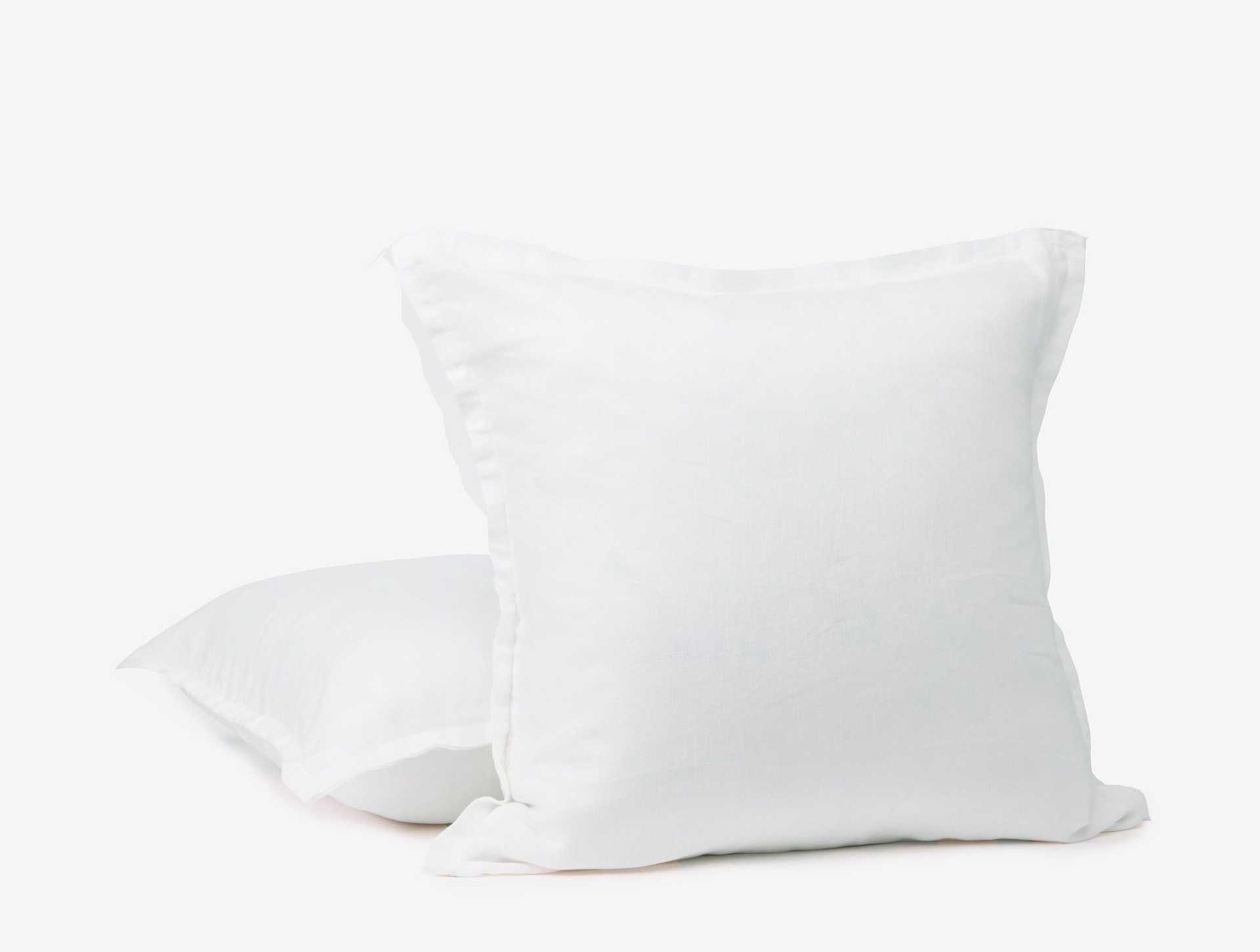
Product construction matters just as much in everyday use. The listed Naturepedic sheet set includes a flat sheet, a fitted sheet and two pillowcases, with a 15-inch pocket on the fitted sheet. The duvet cover set includes a cover and two shams, with corner ties to help hold a comforter in place. Those practical details do not come from the certification claim; they answer questions about what arrives in the set and how the bedding is designed to work.
Shoppers can review the listed Naturepedic Organic Linen Sheets and Naturepedic Organic Linen Duvet Cover Sets to compare the product-specific information. In each case, use the current product label and care instructions as the final reference, since details can vary across sizes, production runs or updated specifications.
What certification does not tell you about comfort
Certification can help answer questions about sourcing and processing. It cannot predict how linen will feel to an individual sleeper. Linen is made from flax fibers and is known for its distinctive texture and relaxed drape, but the hand of a finished fabric depends on how it is spun, woven, finished and washed. Some people value the more textured feel; others prefer a smoother surface.
Nor does a GOTS mark guarantee that linen will keep every sleeper cool in every climate. Linen’s structure can support airflow and moisture movement, qualities that many people find comfortable, but sleep temperature also depends on room conditions, mattress materials, blankets, clothing and personal physiology. A breathable textile is one part of a sleep environment, not a thermostat.
Claims about allergy suitability also deserve care. A product description may explain that a weave or fiber has qualities relevant to a consumer’s concerns, but certification should not be confused with a medical claim. GOTS does not establish that a particular sheet prevents allergies, treats a condition or is suitable for every sensitive sleeper. People with specific medical or contact sensitivities may need to review the full material information and seek appropriate professional advice.
These limits do not make certification less valuable. They help define its value. A credible standard gives shoppers a way to compare certain sourcing and processing claims; it does not collapse the many dimensions of a textile into a single seal.
Care is part of the product’s real-world story
Organic sourcing may influence a purchase, but a sheet’s useful life also depends on how it is cared for. The Naturepedic product information provided for these linen items recommends machine washing warm, tumble drying on low and warm ironing if desired, with no bleach. Those instructions differ from some other organic linen products, which may call for cold water and a gentle cycle. The right rule is the one on the specific item’s label—not a universal assumption about linen.
Care labels are practical documents. They translate a fabric’s construction and finishing into instructions intended to help preserve its appearance and integrity. Washing with suitable detergent, avoiding harsh bleaching agents when prohibited and keeping heat within the recommended range can all help reduce unnecessary wear. Over-drying can make many textiles feel harsher and can place avoidable stress on fibers and seams.
For linen, a little texture is part of the material’s character. A perfectly pressed finish is optional, not a requirement for good care. If a smoother look is preferred, the product guidance may allow ironing while the fabric is slightly damp or using a warm iron. If the relaxed surface is welcome, following the recommended drying method may be enough. The important thing is to respect the instructions for the exact product.
Care also affects value over time. A certification addresses defined production criteria; the consumer’s laundering habits influence how long the textile remains in use. Choosing bedding that can be maintained comfortably at home—and then following its care instructions—helps turn a purchase into a longer-term household decision.
A practical checklist for comparing organic bedding
Certification is most useful when read alongside the rest of the product information. Before choosing organic linen sheets or a duvet cover, consider the following questions:
- What exactly is certified? Look for certification information tied to the product or its production chain, not only a general sustainability statement about a brand.
- What is the fiber composition? Confirm whether the textile is 100 percent linen or a blend, and check details for trims and other components when relevant.
- Which organic claim is used? Read the exact wording and, where necessary, consult current GOTS labeling guidance rather than assuming all organic claims mean the same thing.
- Where did each stage happen? Separate fiber-growing origin from weaving, finishing, sewing and final manufacturing. A country name without a stage can be ambiguous.
- What is the fabric weight? Treat GSM as a comparison point, not a complete measure of quality or comfort.
- What does the set include? Check sizes, pillowcase counts, fitted-sheet pocket depth, duvet ties and closure details before comparing prices or specifications.
- How should it be washed? Follow the item’s own label. Care directions can vary among linen products, even within the same broad category.
- Does it suit your preferences? Consider texture, drape, climate, mattress dimensions and how much upkeep you are willing to do.
This checklist helps keep a certification mark in proportion. It is one meaningful piece of evidence, not a substitute for knowing what the product is and how it will be used.
Why chain-of-custody language matters
Organic fiber claims can lose meaning if materials are not tracked as they move through processing. A chain-of-custody system is intended to document material handling across relevant stages, helping connect certified inputs to the finished product. In practice, certification requirements apply to operations and products within the standard’s scope, with records and audits forming part of the system.
For shoppers, this is the difference between a statement that sounds aspirational and a claim supported by a defined framework. Still, it is reasonable to look for clarity about the claim’s reach. A phrase such as “made in a GOTS-certified facility” describes a facility status; it should not automatically be interpreted as proof that every component in every item is certified. Product-specific labeling and documentation are the better guide.
It is also important not to confuse “organic” with “untreated,” “chemical-free” or “zero impact.” Textile production involves many processes, and a standard manages criteria rather than erasing the physical realities of making fabric. GOTS limits or regulates aspects of processing through its own requirements, but a responsible interpretation avoids absolute claims that a certification does not make.
The best way to use a certification mark
For a shopper, GOTS is neither a magic word nor a minor footnote. It is a tool for asking better questions. It can add substance to an organic-fiber claim by placing it within a broader framework for textile processing and supply-chain accountability. It cannot decide whether a fabric feels right, whether its dimensions fit or whether its care routine works for a household.
Naturepedic’s organic linen bedding illustrates how these details can be considered together. The listed sheets and duvet covers identify organic flax linen, note the French origin of the flax, describe manufacturing at a GOTS-certified facility in India and provide product-level specifications such as fabric weight, set contents and care. Each fact has a different job. Read together, they offer a clearer basis for comparison than a single claim about sustainability or comfort.
That is the larger lesson for organic bedding: transparency is cumulative. Fiber sourcing matters. Processing and facility requirements matter. So do construction, measurements, care and the texture a person wants beside the skin. A certification can help make one part of the textile story more legible. The rest still requires a label read carefully—and a decision made with the full product in view.
In brief
- GOTS addresses organic fiber content and sets requirements for processing and certified operations across relevant parts of the textile supply chain.
- A certification claim does not guarantee a particular feel, health outcome, durability level or environmental impact for the finished product.
- For Naturepedic organic linen bedding, compare the specific fiber, origin, manufacturing, weight, set contents and care details on the product listing and label.
- Use certification as a reason to ask more informed questions—not as a replacement for reading the rest of the product information.